


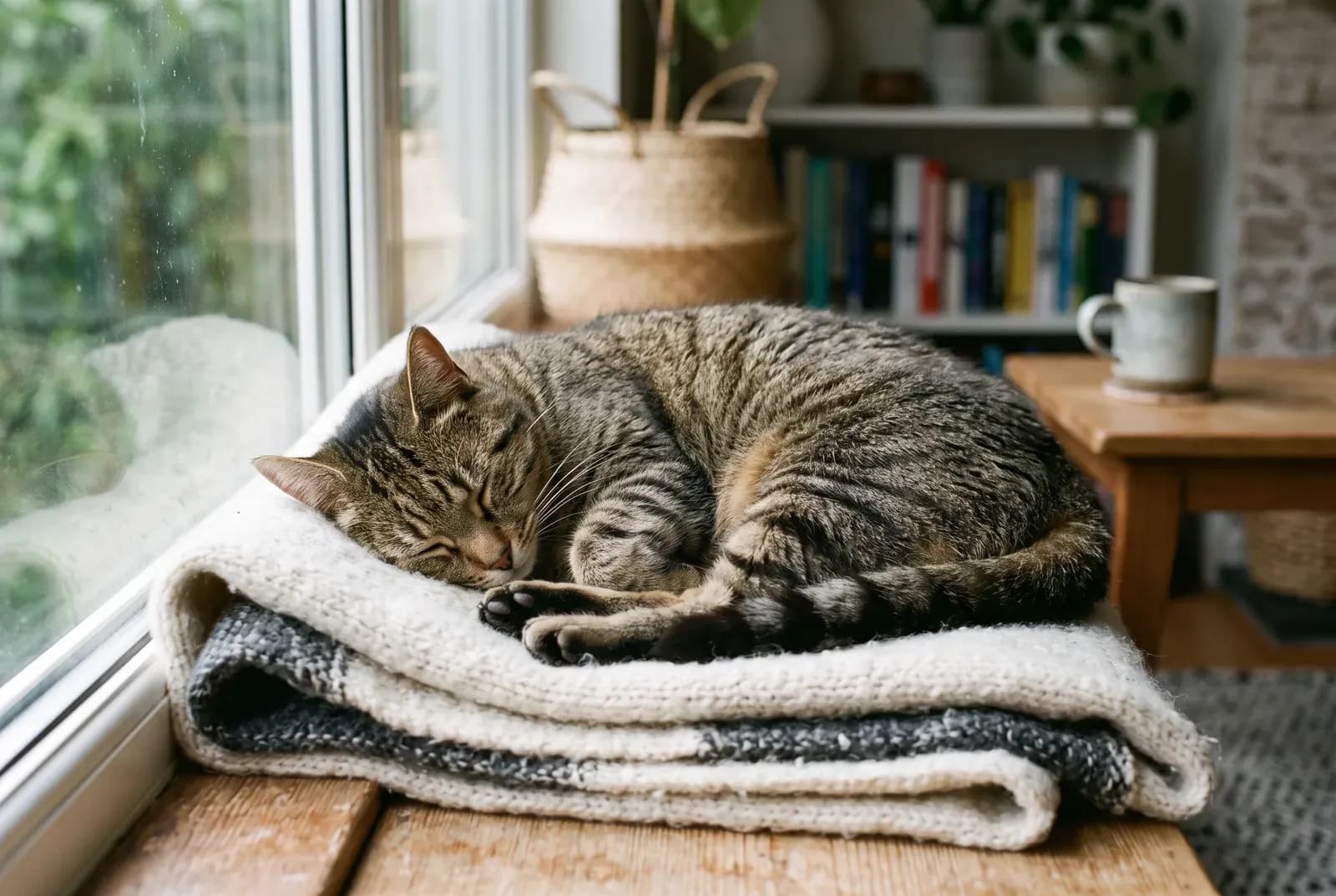
If you use minoxidil for hair loss and live with a cat or a dog, there's one thing you should know: minoxidil is highly toxic to cats. Even very small amounts can be fatal. A few drops of the solution or one or two licks at a freshly treated spot are enough.1 This applies to the topical solution and the foam just as much as to minoxidil in tablet form.
The active ingredient is toxic to dogs as well, but cats are considerably more sensitive.3 You don't have to stop your treatment because of this. With a few everyday precautions, the risk can be significantly reduced. What matters is handling the product carefully for as long as an animal lives in the household. Contact can never be entirely ruled out, so staying attentive remains important.
Why minoxidil is so dangerous for cats
Minoxidil was originally a blood pressure medication and widens the blood vessels. It is precisely this effect on the circulation that becomes a problem in a small animal's body. If a cat ingests the active ingredient, its blood pressure can drop sharply, the heart comes under strain, and fluid accumulates in the lungs and chest.2 In severe cases, this leads to heart failure and death.
Why cats react especially sensitively has not been fully clarified scientifically. What is documented is that the consequences are more severe in cats and more often fatal than in dogs.3 A single drop of a five-percent solution or one or two licks can trigger moderate to severe signs of poisoning, and some of the affected animals do not survive it despite veterinary treatment.1
The point about the tablets is important. Some people take minoxidil as a low-dose tablet; for hair loss, this is an off-label prescribed use in Germany. For cats, these tablets are just as dangerous as the solution. You can read more about the tablet form in the article Oral minoxidil.
How pets come into contact with your minoxidil
Contact rarely happens dramatically; usually it's quite incidental. And because with cats even traces are enough, amounts that seem harmless to you matter too. Typical routes are:
- Licking the treated skin or your hands: When your cat nuzzles your head, licks your freshly treated scalp, or licks your hands before you've washed them.
- Residue on textiles: Traces cling to pillows, bedding, towels, or clothing. If the animal lies on them and then grooms its fur, it takes in the active ingredient through its tongue. Poisonings have occurred simply because a cat lay on a pillow with minoxidil residue and then groomed itself afterward.2
- Spilled solution: A tipped-over bottle or a few splashes on the floor are enough. If the animal walks through it and licks its paws, contact has been made.
- Chewed packaging or tablets: Applicators, bottles, or discarded packaging from the trash and tablets left lying around can be chewed on or swallowed.
How do you recognize minoxidil poisoning in an animal?
The signs often set in after about an hour up to a few hours.4 But they can also be delayed and sometimes only appear after many hours.1 With a cat, watch especially for:
- Loss of appetite, vomiting, or increased salivation
- Weakness, listlessness, withdrawal
- Rapid, labored, or difficult breathing, coughing
- Bluish mucous membranes, a cool body, low temperature
- Staggering, lying on its side, up to collapse
Because minoxidil poisoning can rapidly develop into a life-threatening cardiovascular situation, any of these signs in an animal that had access to minoxidil is an emergency. Don't wait to see whether it gets better on its own. The sooner veterinary treatment is given, the higher the chance of survival.4
How to protect your pet
Prevention is straightforward and takes only a few small steps in your daily routine. These points cover the most important routes of contact:
- Store it safely: Keep the solution, foam, and tablets closed and out of reach, ideally in a cabinet the animal cannot get to.
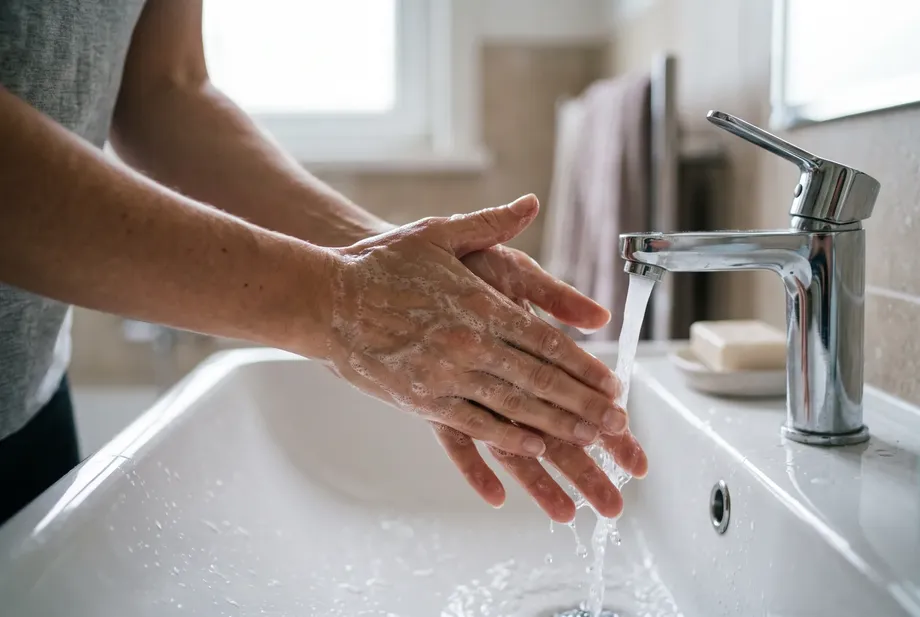
- Wash your hands thoroughly: Wash your hands with soap after each application, before you pet or feed your animal.
- Let it dry completely: Let the treated scalp dry fully before an animal comes near it or you lie down.
- Avoid contact with the treated area: Don't let your animal lick either your scalp or your hands. Apply the product in a room without your pet if possible.
- Keep textiles in mind: Think of pillows, duvet covers, and towels that come into contact with the treated area, and keep your animal away from them.
- Wipe up spills immediately: Wipe away spilled solution right away and rinse the spot afterward.
- Dispose of packaging safely: Throw applicators, empty bottles, and packaging into a closed trash bin the animal cannot reach.
What to do in an emergency
If your animal has come into contact with minoxidil, or you suspect it has, every minute counts:
- 1.Go to the vet immediately. Call your veterinary practice, an animal clinic, or the veterinary emergency service right away and go there. The vet is always the first point of contact. Human poison control centers are only of limited help for animals, because their staff are not trained in veterinary medicine.
- 2.Rinse off the fur or skin. If there is still solution in the fur or on the skin, rinse the area beforehand with plenty of running water so that your animal doesn't take in even more.5 Avoid home remedies and don't try to induce vomiting on your own.
- 3.Bring information with you. Take the product packaging with you or note which preparation it is, roughly how much was involved, and when the contact happened. This helps the practice with the treatment.
How a poisoning is treated by the vet depends on the animal's condition and belongs in expert hands. Your job is not to lose any time.
Keep using minoxidil and protect your animal
Minoxidil is an established and widely used treatment for hair loss, and having a pet in the household is no reason to give it up. What matters is a clear separation of product and animal. No single measure is absolute on its own, but taken together they can largely avoid the risk, as long as you stay attentive in daily life.
If you're unsure whether your therapy fits you and your daily life, you can have this clarified by a doctor. With us, you complete an online medical review for that, and our doctors check what makes sense for you. An overview of causes and treatment approaches is given in the article Understanding hair loss.
Frequently asked questions
Is minoxidil really fatal for cats?
Yes, it can be. Cats react very sensitively to minoxidil. Just a few drops of the solution or one or two licks at a treated spot can trigger severe signs of poisoning, and some of the affected cats do not survive it despite veterinary treatment. That's why consistent caution is so important.
Is topical minoxidil dangerous too, or only the tablet?
Both forms are dangerous. The topical solution and the foam are just as toxic to cats as minoxidil in tablet form. With the solution, there's the added factor that residue easily ends up on skin, hands, and textiles, where an animal can lick it up.
My dog licked my scalp, is that dangerous?
Minoxidil is toxic to dogs too, but they are less sensitive than cats. If your dog shows signs such as vomiting, weakness, or an abnormal heartbeat, or if it has taken in a larger amount, call your veterinary practice right away. When in doubt: better to get it checked once too often.
How quickly does poisoning show in an animal?
Often the first signs appear after about an hour up to a few hours. But they can also be delayed and only show after many hours. That's why you should watch your animal closely after suspected contact and act immediately at the first symptoms.
What do I do if my cat has ingested minoxidil?
Go to the vet or an animal clinic immediately, without waiting. If there is still solution in the fur, rinse the area beforehand with plenty of water. Do not induce vomiting and do not give home remedies. Take the product packaging with you or note which product it is.
Do I have to stop minoxidil if I have a cat?
No. You can keep using minoxidil as long as product and animal stay separated. Store it safely and out of reach, wash your hands after applying it, let the treated area dry, and keep your animal away from pillows and towels where residue might be.
Sources
- 1.Institute of Veterinary Pharmacology and Toxicology of the University of Zurich (n.d.). Minoxidil (Clinitox toxin database). https://www.vetpharm.uzh.ch/clinitox/TOXDB/KLT_097.htm
- 2.ASPCA (n.d.). Minoxidil and Pets: What You Need to Know. https://www.aspca.org/news/minoxidil-and-pets-what-you-need-know
- 3.Pet Poison Helpline (n.d.). Hair Loss Drug Can Be Deadly to Pets. https://www.petpoisonhelpline.com/toxintails/hair-loss-drug-can-be-deadly-to-pets/
- 4.Pet Poison Helpline (n.d.). Warning: Minoxidil. https://www.petpoisonhelpline.com/pet-owner-blog/warning-minoxidil-2/
- 5.fellomed (n.d.). Minoxidil: giftig für Hund und Katze. https://www.fellomed.de/ratgeber/giftig-hund-katze/minoxidil-hund-katze/